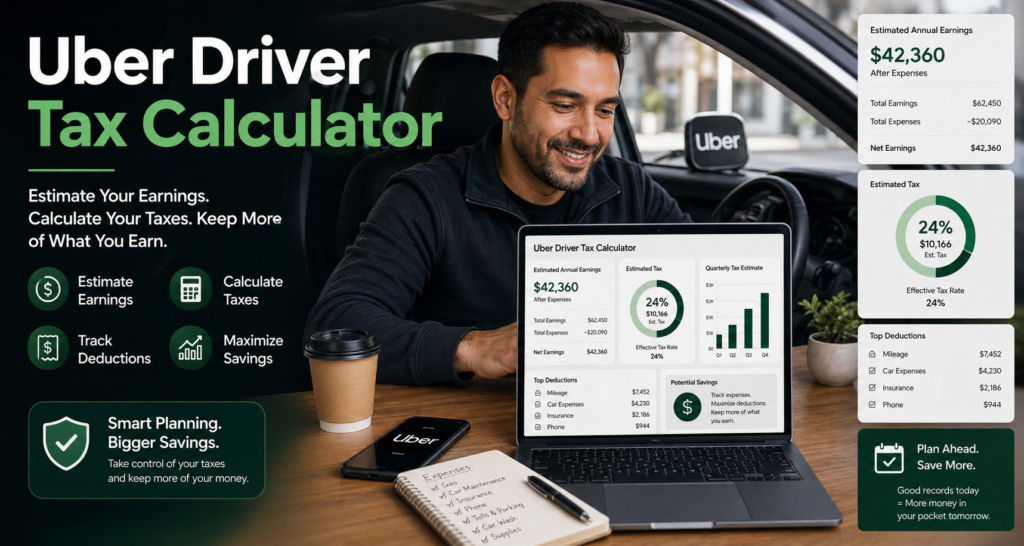
Learning how to pay quarterly taxes as a gig worker is one of the most important things you can do to protect yourself from IRS penalties. Most new gig workers do not know quarterly payments exist until they miss the first one. The good news is that the process is simpler than it sounds — and once you do it once, it takes less than five minutes each quarter.
Why Gig Workers Have to Pay Quarterly Taxes
When you work a regular job, your employer takes tax out of every paycheck automatically. As a gig worker on DoorDash, Uber, Instacart, or any 1099 platform, that does not happen. Nobody withholds anything. As a result, the IRS requires you to pay your estimated tax yourself — four times a year.
This system is called the estimated tax payment system. It exists because the IRS wants to collect tax throughout the year, not all at once. If you wait until April to pay everything, the IRS charges an underpayment penalty — even if you pay the full amount when you file. For this reason, staying on top of quarterly payments is not optional for most active gig workers.
Do You Have to Pay Quarterly Taxes?
Not every gig worker needs to make quarterly payments. The IRS rule is straightforward — if you expect to owe $1,000 or more in total tax for the year, you are required to make quarterly estimated payments. For most full-time or part-time gig workers earning more than a few hundred dollars per month, this threshold is easy to cross.
However, if you also have a regular W-2 job and your employer withholds enough tax to cover your gig income too, you may not need to pay separately. The safest way to check is to run your numbers through our free gig worker tax calculator and see your estimated total bill.
2026 Quarterly Tax Due Dates for Gig Workers
The IRS sets four quarterly due dates each year. Missing any of these dates results in a penalty — so mark them in your calendar right now.
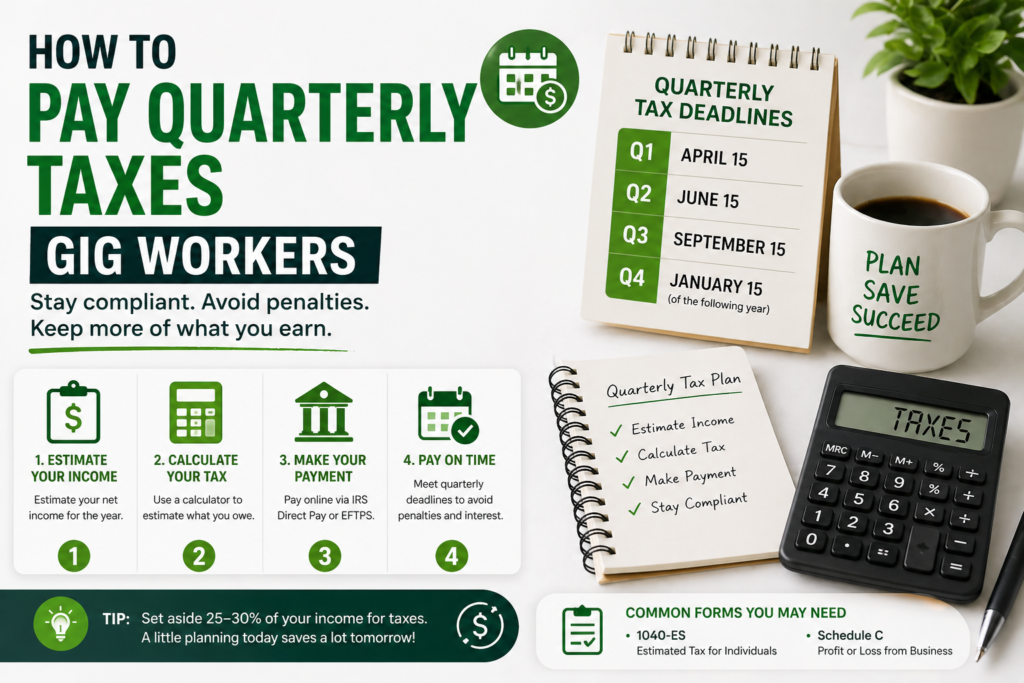
Q1 — January 1 to March 31 → Payment due April 15, 2026
Q2 — April 1 to May 31 → Payment due June 16, 2026
Q3 — June 1 to August 31 → Payment due September 15, 2026
Q4 — September 1 to December 31 → Payment due January 15, 2027
Notice that Q2 only covers two months, not three. This is a common mistake — many gig workers underpay Q2 because they assume it covers April through June. In fact, Q2 covers only April and May. June income goes into Q3.
How Much to Pay Each Quarter
Before you can pay, you need to know how much to send. The IRS does not send you a bill — you have to work it out yourself. There are two ways to do this.
The first method is to estimate your total tax for the full year using a gig worker tax calculator, then divide that number by four. Each quarterly payment is one quarter of your estimated annual bill. This is the most accurate method and the one our calculator uses.
The second method is the safe harbor rule. Under this rule, you pay at least 100% of what you owed last year — divided into four equal payments — and the IRS will not charge a penalty even if you end up owing more this year. This method works well if your income is similar to last year.
For most gig workers, setting aside 25–30% of every payment throughout the year is a reliable habit that keeps quarterly payments manageable.
How to Actually Pay the IRS Quarterly
Paying the IRS quarterly is easier than most people expect. Here is the step by step process.
Step 1 — Go to pay.irs.gov — the official free IRS payment portal.
Step 2 — Click “Make a Payment” and select “Estimated Tax” as the reason.
Step 3 — Choose the tax year and quarter you are covering.
Step 4 — Enter your bank routing number and account number. The payment pulls directly from your bank at no cost.
Step 5 — Confirm and save your confirmation number as proof of payment.
Alternatively, you can pay by phone by calling 1-800-829-1040, by mail using Form 1040-ES, or through the IRS2Go mobile app. However, the online method at pay.irs.gov is the fastest and easiest for most gig workers.
What Happens If You Miss a Quarterly Payment
Missing a quarterly tax payment does not mean you go to jail or get into serious trouble. However, it does mean you will owe an underpayment penalty when you file your annual return. The penalty is calculated based on how much you underpaid and for how long. In most cases it is a small percentage — but it adds up over four quarters and is completely avoidable.
The good news is that paying late is always better than not paying at all. If you miss a due date, pay as soon as you can to stop the penalty from growing. Furthermore, if you had very little income in a quarter, you can pay a smaller amount for that quarter and a larger amount in the next one to catch up.
Start With a Free Tax Estimate
Before you make your first quarterly payment, run your numbers through our free gig worker tax calculator. Enter your annual earnings, your business miles, and your state — and the calculator will show you exactly how much to pay each quarter. It takes under 60 seconds and removes all the guesswork.
For more platform-specific tax guides, read our DoorDash Tax Calculator guide, our Uber Driver Tax Calculator guide, and our Instacart Tax Calculator guide. You can also check the official IRS guidance on estimated taxes at the IRS estimated taxes page.